

Decoding AmpC Beta-lactamases: The Evolving Threat of Chromosomal and Plasmid-Mediated Resistance
AmpC β-lactamases are a formidable class of enzymes, quietly shaping the future of antibiotic resistance in clinical settings. Understanding their genetic origins and dissemination dynamics is crucial for monitoring and preventing multidrug-resistant infections.
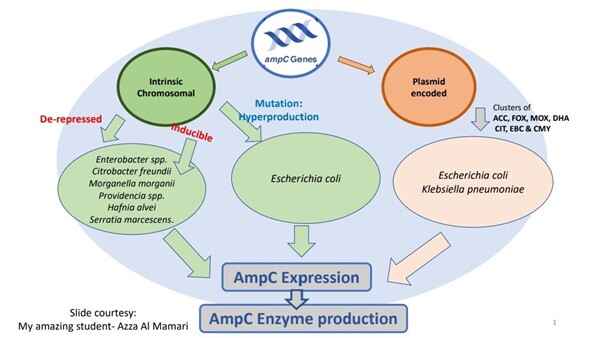
Unravelling AmpC: Chromosomal vs. Plasmid-Mediated Genes
AmpC β-lactamases are enzymes that hydrolyze broad-spectrum β-lactam antibiotics, notably cephalosporins. They are encoded either on chromosomal DNA (intrinsic) or on mobile genetic elements (plasmids). The origin of ampC genes directly influences their expression, inducibility, and, most critically, their ability to spread among bacterial populations.
Chromosomally Mediated AmpC
Several Gram-negative bacteria possess intrinsic, chromosomally located ampC genes, typically regulated via inducible or repressible mechanisms. The primary culprits include:
- Enterobacter species
- Citrobacter freundii
- Morganella morganii
- Providencia species
- Hafnia alvei
- Serratia marcescens
Plasmid-Mediated AmpC: A Game Changer
Plasmids—small, self-replicating DNA molecules—can carry AmpC genes and transfer them horizontally between bacteria, a major concern in the fight against antimicrobial resistance. The two main recipients garnering attention are:
- Escherichia coli
- Klebsiella pneumoniae
Unlike their chromosomal counterparts, these bacteria do not routinely express AmpC at significant levels. However, when they acquire plasmid-encoded AmpC, their resistance is not only elevated but also easily transferred to other species. Notably, these plasmids often harbor clusters such as ACC, FOX, MOX, DHA, CIT, EBC, and CMY, further enhancing their spectrum and prevalence.
Plasmid-borne AmpC is a ticking time bomb, threatening to redraw the boundaries of antibiotic resistance.
Why is Plasmid-mediated AmpC Such a Huge Concern?
The central issue with plasmid-mediated AmpC is the potential for rapid, widespread dissemination of resistance:
- Horizontal Gene Transfer: Plasmids can jump across bacterial species and genera, accelerating the spread in both hospital and community environments.
- Broadened Resistance: Plasmid-borne AmpC confers resistance to many β-lactam antibiotics, including third-generation cephalosporins, often leaving limited treatment options.
- Diagnostic Challenge: It is difficult to detect plasmid-mediated AmpC producers in clinical laboratories using standard protocols, risking inappropriate therapy and adverse outcomes.
- Co-resistance: Plasmids frequently carry other resistance determinants (e.g., ESBLs, carbapenemases), compounding the difficulty of treatment.
The situation is further complicated when E. coli or K. pneumoniae, key pathogens in urinary tract, bloodstream, and respiratory infections, acquire these resistance genes. Treatment becomes less predictable and more reliant on last-resort drugs, escalating both patient risk and healthcare costs.
The Clinical and Epidemiological Implication
Widespread, plasmid-mediated AmpC threatens to compromise our existing arsenal of antibiotics. This is especially worrying in regions and institutions where antibiotic stewardship and infection control are suboptimal. The clinical trajectory shifts—first-line therapies fail, longer hospital stays ensue, and morbidity and mortality rates climb.
The ability of AmpC genes to jump species boundaries via plasmids represents a profound shift in the antimicrobial resistance landscape.
Looking Forward: Surveillance, Stewardship, and Innovation
Strategies to tackle AmpC should include:
- Enhanced laboratory surveillance for both chromosomal and plasmid-mediated AmpC producers.
- Strict antibiotic stewardship to minimize unnecessary β-lactam exposure.
- Molecular epidemiology to track resistance gene movement within and across institutions.
- Development and deployment of new β-lactamase inhibitors and alternative therapeutic options.
A multidisciplinary approach will be vital as we confront the ever-evolving threat posed by AmpC, particularly in the context of plasmid-mediated gene dissemination.
For Further Reading
Interested in the broader context of how we’re combating multidrug-resistant organisms? Read our in-depth analysis:
Fighting Superbugs: The Race to Save Our Last-Resort Antibiotics
And if you’re curious about technology’s role in this global challenge, don’t miss our perspective on artificial intelligence in healthcare:
AI as the Great Equalizer – Balancing Promise and Peril in the Digital Age
References
- Tamma PD, Doi Y, Bonomo RA, Johnson JK, Simner PJ; Antibacterial Resistance Leadership Group. A Primer on AmpC β-Lactamases: Necessary Knowledge for an Increasingly Multidrug-resistant World. Clin Infect Dis. 2019 Sep 27;69(8):1446-1455. doi: 10.1093/cid/ciz173. PMID: 30838380; PMCID: PMC6763639.
- Jacoby GA. AmpC beta-lactamases. Clin Microbiol Rev. 2009;22(1):161-182. doi:10.1128/CMR.00036-08
- Gupta G, Tak V, Mathur P. Detection of AmpC β Lactamases in Gram-negative Bacteria. J Lab Physicians. 2014 Jan;6(1):1-6. doi: 10.4103/0974-2727.129082. PMID: 24696552; PMCID: PMC3969634.